Health and society
Clinical data, biostatistics and syndemic models to study disease in context.
Models, data and images to study health, the environment and cultural heritage.
At BioComLab, we develop algorithms and tools that connect scientific questions with computational solutions, from clinical records to reconstructing the world in 3D.
From the structure of an image
to the relationships within data.
Founded in 2015, BioComLab brings physics and computing to questions in health, environmental science and archaeology.
Clinical data, biostatistics and syndemic models to study disease in context.
Computer vision, 3D reconstruction and shape analysis to measure what we observe.
Remote sensing, spatial modeling and simulation to explore natural and population processes.
Non-invasive analysis tools, morphometry and virtual reality applied to archaeology.
Objectives, methods and tools in our current research.
 Health
On Azure
A multicenter registry to study lupus in Latin America. Organizes clinical instruments and longitudinal follow-up with country-specific versions.
 Environment
Research and development
Study benthic habitats in satellite imagery using deep learning segmentation and evaluate how well models generalize across regions.
 Methods
Research and development
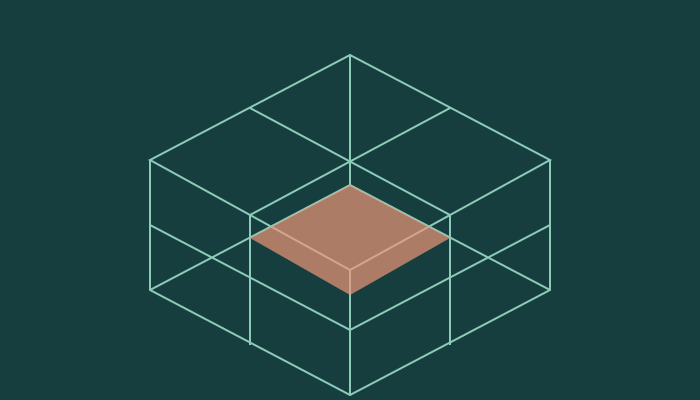
Develop and compare GPU-accelerated spatial structures as a basis for simulation, neighborhood searches and point cloud processing.
Articles, book chapters and conference contributions, with links to publications and source records.
JCR-JOURNAL OF CLINICAL RHEUMATOLOGY
International Conference On Artificial Intelligence, Computer, Data Sciences, And Applications, Acdsa 2026
Theses, courses and research internships help us develop our methods. Discover the topics and work of those who have contributed.
Alumni and theses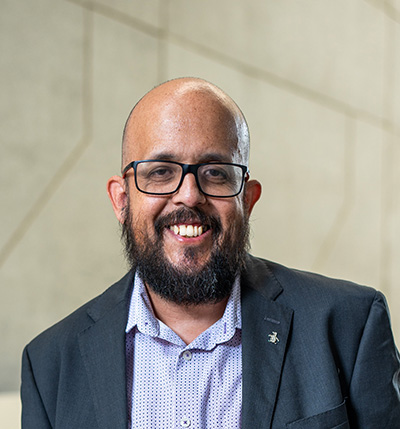
A physicist with a master's degree in Medical Physics and a PhD in Computer Science. An ICAT researcher affiliated with UNITA, working in computer vision, simulation and data analysis.
View biography and CV